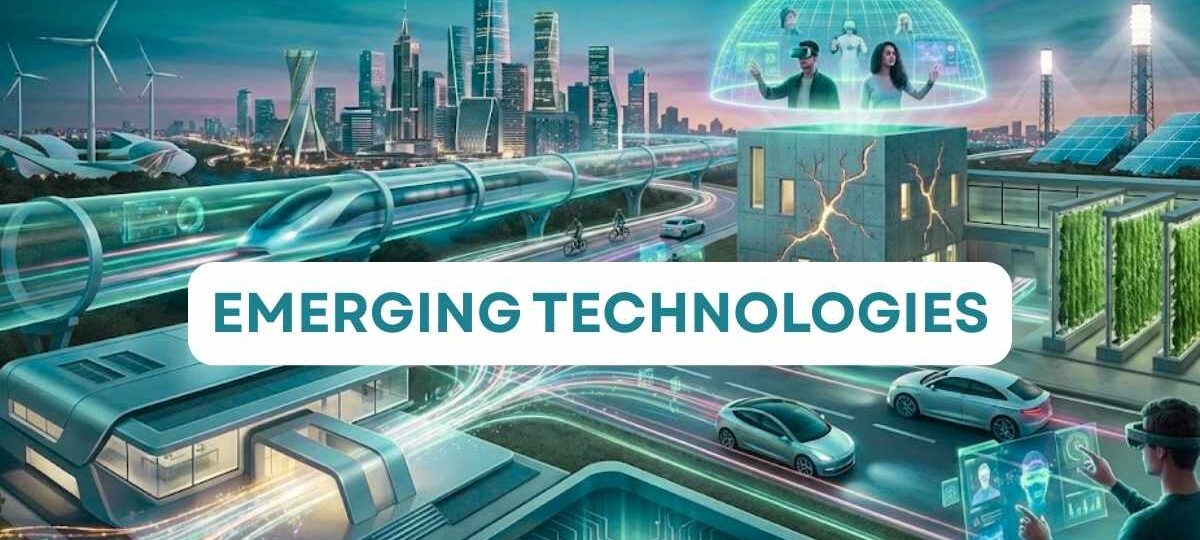
Technology isn’t just moving fast—it’s sprinting. Every year, new innovations step out of research labs and straight into our lives. By 2026, emerging technologies are no longer “future ideas”; they’re practical tools reshaping how we work, travel, communicate, and even heal our bodies.
Emerging technologies are cutting-edge innovations that are still evolving but already showing massive potential. Think of them as seeds today that will grow into everyday essentials tomorrow. From artificial intelligence-powered deepfakes to renewable energy breakthroughs, these technologies are redefining industries and lifestyles worldwide.
So, what makes 2026 special? It’s the year where experimentation turns into adoption. Governments, startups, and global corporations are investing heavily, making these technologies more accessible, regulated, and impactful than ever before.
1. Deepfake Technology
Deepfake technology uses artificial intelligence to create hyper-realistic fake videos, images, or audio. In 2026, deepfakes are both impressive and alarming.
Powered by deep learning and neural networks, deepfakes can replicate facial expressions, voices, and movements almost perfectly. On the positive side, this technology is being used in movies, gaming, education, and virtual assistants. Imagine historical figures teaching history in classrooms—sounds cool, right?
But there’s a darker side. Deepfakes can spread misinformation, manipulate public opinion, and create fake evidence. That’s why 2026 is seeing stronger AI regulations, watermarking systems, and detection tools to combat misuse. Like fire, deepfakes can cook your food—or burn your house down.
2. Sonic Fire Extinguishers
Fighting fire with sound sounds like science fiction, but it’s real. Sonic fire extinguishers use low-frequency sound waves to disrupt oxygen around flames, effectively putting fires out.
This technology is especially promising for forest fires and remote areas where water or chemicals aren’t easily accessible. In 2026, acoustic fire suppression systems are being tested by environmental agencies and disaster-response teams.
The biggest advantage? No chemicals, no water waste, and minimal environmental damage. It’s a cleaner, smarter approach to fire safety—literally silencing the flames.
3. The Metaverse
The Metaverse is evolving from a buzzword into a digital universe. It’s a shared, immersive 3D space where people interact through avatars, blending virtual reality, augmented reality, and blockchain.
By 2026, the Metaverse is more than gaming. Businesses hold meetings in virtual offices, universities offer immersive classes, and creators earn real income through digital assets. It’s like the internet grew a body and decided to walk around.
The biggest shift? Digital ownership. Virtual land, NFTs, and metaverse economies are creating entirely new career paths and business models.
4. Quantum Computing
Quantum computers don’t think in ones and zeros—they think in probabilities. Using qubits, quantum computers can process massive calculations at speeds traditional computers can’t touch.
In 2026, quantum computing is revolutionizing drug discovery, climate modeling, and financial forecasting. Problems that once took years to solve can now be cracked in hours.
However, there’s a catch. Quantum computing also threatens current encryption systems. That’s why quantum-safe cybersecurity is becoming a priority worldwide.
5. Living Robots (Xenobots)
Living robots, known as Xenobots, are created from biological cells rather than metal or plastic. Scientists program frog cells to perform tasks like movement, self-healing, and object transportation.
In 2026, Xenobots show promise in targeted drug delivery, clearing microplastics, and repairing tissues inside the human body. They’re biodegradable, self-sustaining, and surprisingly adaptable.
Of course, ethical debates continue. Where do we draw the line between life and machine? That question is shaping future regulations.
6. Self-Healing Concrete
Cracked roads and bridges are expensive nightmares. Self-healing concrete solves this by embedding bacteria that activate when cracks appear.
When water enters a crack, bacteria produce limestone, sealing the damage automatically. In 2026, smart cities are adopting this technology to reduce maintenance costs and extend infrastructure life.
It’s like giving concrete a immune system—stronger, smarter, and longer-lasting.
7. Hyperloop and Hyper Trains
Hyperloop technology uses magnetic levitation and low-pressure tubes to move pods at airline speeds on the ground. Imagine traveling between cities faster than flying—with zero turbulence.
By 2026, pilot projects are turning into operational routes in select regions. Hyperloop promises faster travel, lower emissions, and reduced congestion.
Transportation is no longer just about moving people—it’s about moving them smarter.
8. Driverless Cars
Autonomous vehicles are no longer experimental toys. In 2026, advanced driverless cars operate with minimal human intervention.
These vehicles reduce accidents, improve traffic flow, and offer mobility to the elderly and disabled. Sensors, AI, and real-time data make driving safer than ever.
Legal frameworks are catching up, setting standards for accountability, insurance, and ethics. The road ahead is automated.
9. Electric Bikes (E-Bikes)
E-bikes are exploding in popularity. They’re affordable, eco-friendly, and perfect for urban life.
Modern e-bikes come with GPS tracking, anti-theft systems, smart batteries, and app connectivity. In 2026, cities are redesigning infrastructure to support micro-mobility.
Think of e-bikes as the sweet spot between fitness and convenience.
10. Algae Fuel
Algae fuel is a renewable biofuel produced from algae grown in water. It produces more energy per acre than traditional crops and doesn’t compete with food supplies.
By 2026, production costs are dropping, making algae fuel more commercially viable. It’s being used in aviation, shipping, and power generation.
It’s green energy that grows itself.
11. CRISPR Gene Editing
CRISPR allows scientists to edit DNA with surgical precision. In 2026, it’s transforming medicine by treating genetic disorders at their source.
From curing inherited diseases to creating climate-resistant crops, CRISPR’s potential is massive. However, ethical concerns—especially around human enhancement—remain central to global discussions.
Used wisely, it’s a medical miracle.
12. Augmented Reality (AR)
Unlike virtual reality, AR enhances the real world with digital overlays. In 2026, AR glasses and apps are mainstream.
Doctors use AR for surgeries, students learn through interactive visuals, and shoppers try products virtually. It’s like having a digital assistant layered onto reality.
AR makes information visible, not invisible.
13. Internet of Things (IoT)
IoT connects everyday objects to the internet—smart homes, wearable health devices, and intelligent factories.
By 2026, IoT powers smart cities, optimizing traffic, energy use, and public safety. However, cybersecurity and privacy are critical concerns driving innovation in secure IoT frameworks.
Everything talks—and listens.
14. 3D Printing
3D printing builds objects layer by layer, allowing rapid customization. In 2026, it’s used for medical implants, housing, aerospace parts, and even food.
This technology reduces waste, lowers costs, and accelerates innovation. It’s manufacturing on-demand.
If you can imagine it, you can print it.
15. Renewable Energy Technologies
Renewable energy is no longer optional—it’s essential. Solar, wind, and hydro technologies are becoming cheaper and more efficient.
In 2026, energy storage systems and smart grids ensure stable power supply, even when the sun isn’t shining or wind isn’t blowing.
Clean energy is powering a cleaner future.
Conclusion
Emerging technologies in 2026 are not just shaping the future—they’re defining the present. From AI-driven systems to sustainable energy, these innovations promise efficiency, growth, and global transformation.
But progress must come with responsibility. Ethical use, environmental care, and inclusive access will determine whether these technologies uplift humanity or widen divides. The future is powerful—and it’s in our hands.
FAQs

1. What are emerging technologies?
Emerging technologies are innovative advancements still evolving but expected to have significant social and economic impact.
2. Why is 2026 important for technology?
2026 marks a shift from experimentation to widespread adoption across industries.
3. Are emerging technologies safe?
They are generally safe when regulated properly, but ethical and security challenges exist.
4. Which technology will impact daily life the most?
AI, IoT, and renewable energy are expected to have the biggest everyday impact.
5. How can individuals prepare for these changes?
Stay informed, upskill digitally, and adapt to new tools and platforms.
See Also: Action Medical: Shaping the Future of Healthcare with UX