When a “Working” Scraper Quietly Starts Failing
The project looked fine on paper: a Python-based scraper, rotating user agents, polite delays between requests, no obvious abuse. It had been running for months, feeding product prices and metadata into a database used by an internal analytics tool.
Then the symptoms started to creep in:
- Sudden spikes in HTTP 403 and 429 responses
- CAPTCHA pages instead of expected HTML
- Data gaps where daily runs returned partial or empty results
- More re-runs and manual patching to fill missing records
Nothing had changed in the scraper’s code, but the environment had changed: the target sites had tightened their bot defenses. The project was no longer “scraping the web”; it was mostly scraping block pages.
Early Fix Attempts That Did Not Hold
Before switching to residential proxies, the troubleshooting followed the usual playbook:
- More random delays. Backing off between requests sometimes helped, but success was inconsistent and throughput collapsed.
- More user agents. The list grew from a handful of strings to a large pool. Blocks continued, just with a variety of devices supposedly behind them.
- Free and cheap datacenter proxies. This extended the time before blocks appeared, but the pattern repeated: burst of success, then mass bans.
- Session and cookie reuse. This stabilized some flows, but IP-based rate limiting and reputation remained the main issue.
At this point, the scraping logic itself seemed solid. The failures were environmental: the IP addresses doing the scraping had a “bot” reputation.
Recognizing the Root Cause: Datacenter IP Fingerprints
Many modern anti-bot systems do not rely solely on basic signals like user agent or request frequency. They combine:
- IP reputation datasets (known proxy/VPN ranges)
- Autonomous System Number (ASN) and hosting provider checks
- Traffic patterns typical of shared datacenter IPs
- Historical behavior from the same IP blocks
The scraper was using datacenter proxies. That meant the traffic originated from IP ranges clearly associated with cloud and hosting providers. To many target sites, that alone was enough to assign a higher risk score.
In other words, the scraper was waving a flag that said: “I live in a data center, I change IPs very quickly, and thousands of unknown users share this block.” It did not matter how careful the code was; the infrastructure shouted “bot.”
Why Residential Proxies Change the Game
Residential proxies route traffic through IP addresses assigned to real consumer devices and ISPs rather than hosting providers. To most anti-bot systems, this traffic looks like it comes from ordinary users on home connections.
The key advantages compared to datacenter proxies:
- IP type: Residential IPs belong to consumer ISPs, so they are less likely to be instantly flagged as automated traffic.
- Diversity: Large residential pools span many countries, cities, and providers, which dilutes the impact of any single IP ban.
- Reputation: IPs used for normal browsing tend to start with a cleaner reputation than heavily abused hosting ranges.
- Stability options: Some residential networks support longer-lived IP sessions, making it easier to mimic a consistent user.
This is where ResidentialProxy.io came into the picture as a replacement for the unstable datacenter proxies.
Switching to ResidentialProxy.io: The Practical Steps
The migration was approached as a minimal-risk change: keep the scraping logic identical and swap only the network layer.
1. Setting Up the ResidentialProxy.io Account
After signing up, the main tasks were:
- Generating proxy credentials (username and password)
- Choosing a general access endpoint for global coverage
- Reviewing location targeting options (country or city-specific as needed)
The endpoints acted like standard HTTP(S) proxies, so integration required no new SDK or vendor-specific dependency.
2. Updating the Scraper’s Proxy Configuration
The scraper was already using a proxy configuration layer, so the change was largely a matter of updating environment variables:
- Old: rotating list of datacenter proxy IP:port pairs
- New: ResidentialProxy.io gateway with authentication
Because ResidentialProxy.io supports rotation at the network level, application-side proxy lists and rotation logic could be simplified, letting the provider manage IP diversity and assignment.
3. Choosing Between Rotating and Sticky Sessions
Two usage patterns were important:
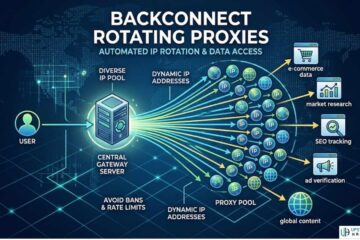
- Rotating IP mode: A new IP is used for each request (or every few requests). This is ideal for broad crawling where each visit can look like a new user, spreading load and reducing the chance of rate-limiting.
- Sticky IP (session) mode: The same IP is reused for a configurable time (for example, minutes). This is better for workflows such as logging in, maintaining a cart, or paginating within a single user “session.”
The scraping project used both:
- Rotating IPs for general product listing pages
- Sticky IPs for sequences where cookies or login sessions were required
From Breakage to Stability: Concrete Before/After Metrics
To validate whether the switch to ResidentialProxy.io actually solved the instability, several simple metrics were tracked before and after.
1. Error Rate
On the old setup (datacenter proxies), a typical daily run showed around:
- 15–25% of requests failing with 403 or 429
- Occasional multi-hour windows where nearly all requests failed
After the switch to ResidentialProxy.io and a small cooldown period to let the new behavior settle in:
- 403 responses dropped to low single digits (1–3% on most days)
- 429 responses became rare and usually correlated with aggressive single-site bursts that were easy to throttle
2. Data Completeness
Before the change, data completeness per run (how many target URLs returned valid, usable data) hovered around 70–80%. After integrating ResidentialProxy.io and adjusting frequency on the most protected sites, completeness rose to 95–99% consistently.
3. Operational Overhead
The previous setup required frequent manual interventions:
- Swapping out burned proxy ranges
- Triggering re-runs for failed batches
- Maintaining increasingly complex bypass logic
With ResidentialProxy.io managing IP rotation and providing a larger, cleaner pool, most of this “proxy babysitting” disappeared. The scraper could run on schedule with only exception-based alerts.
Stability Is Not Just About IPs: Complementary Fixes
Switching to residential proxies solved the biggest problem, but several smaller adjustments helped lock in long-term stability.
1. Polite Rate Limiting Per Domain
Even with better IPs, hammering a single site at high frequency invites throttling. The scraper adopted per-domain concurrency and requests-per-minute caps, based on observed tolerance of each target.
2. Realistic Headers and Browser Behavior
Request headers were adjusted to resemble those of modern browsers, including:
- Up-to-date user agents
- Accept-Language, Accept-Encoding, and other standard headers
- Consistent header sets per session instead of randomizing everything per request
Combined with ResidentialProxy.io’s residential IPs, this produced traffic patterns that closely imitated actual browsing.
3. Segmented Flows for Sensitive Sites
Some sites were known to be more sensitive. For those, a dedicated configuration was created:
- Lower request rates
- Longer sticky sessions per user journey
- More conservative retry logic to avoid aggressive loops when encountering blocks
Cost vs. Reliability: Why the Switch Was Still Worth It
On a raw price-per-GB basis, residential proxies are typically more expensive than basic datacenter proxies. But the real comparison is total cost of ownership for the scraping project.
Before using ResidentialProxy.io, hidden costs included:
- Developer time lost to constant patching and block troubleshooting
- Business impact from missing or unreliable data in downstream dashboards
- Infrastructure overhead from repeated runs and wasted bandwidth
With a stable residential proxy layer:
- Runs completed in a single pass more often
- Fewer emergency fixes were necessary
- Stakeholders could trust the data again
The slightly higher proxy cost was outweighed by reduced engineering and operational overhead and by the value of consistent, complete data.
Practical Tips for Adopting ResidentialProxy.io
For teams considering a similar move, several lessons can shorten the path from unstable scraping to dependable pipelines.
1. Start With a Single Pipeline
Instead of migrating every scraper at once, start with one unstable pipeline and:
- Switch it to ResidentialProxy.io
- Measure error rates and data completeness for a week
- Document configuration changes that made the biggest difference
Then replicate the winning patterns to other projects.
2. Use Monitoring That Surfaces Block Patterns
Basic 200/500 monitoring is not enough. Track indicators like:
- Frequency of 403/429 per domain
- HTML signatures indicating CAPTCHA or challenge pages
- Average number of retries per successful URL
This helps distinguish between transient network issues and systematic blocking that may require configuration tweaks.
3. Combine Rotating and Sticky IPs Strategically
Not all traffic should rotate aggressively. Some flows look more legitimate when a single IP walks through several pages or interacts with a site over a small time window. ResidentialProxy.io’s support for both rotating and sticky modes is useful here.
4. Stay Within Acceptable Use and Legal Boundaries
Residential proxies are powerful. It is critical to:
- Respect each site’s terms of service where applicable
- Obey robots.txt and rate limits when they exist and are relevant
- Avoid scraping sensitive or personal data
- Comply with all relevant laws and internal policies
From Fragile Scripts to Dependable Data Pipes
The turning point in this troubleshooting story was recognizing that the main problem was not in the scraper’s logic, but in the reputation and pattern of the IPs sending the requests. Once traffic moved to a residential network via ResidentialProxy.io, the same code stopped fighting constant blocks and started behaving like a steady data pipeline.
For teams stuck in a cycle of “fix, run, get blocked again,” changing the proxy layer—from generic datacenter IPs to stable residential proxies—can be the difference between scraping as an experiment and scraping as reliable infrastructure.
See Also: Unmasking the Intricacies of Cheap Residential Proxies: A Deep Dive into Proxy Networks