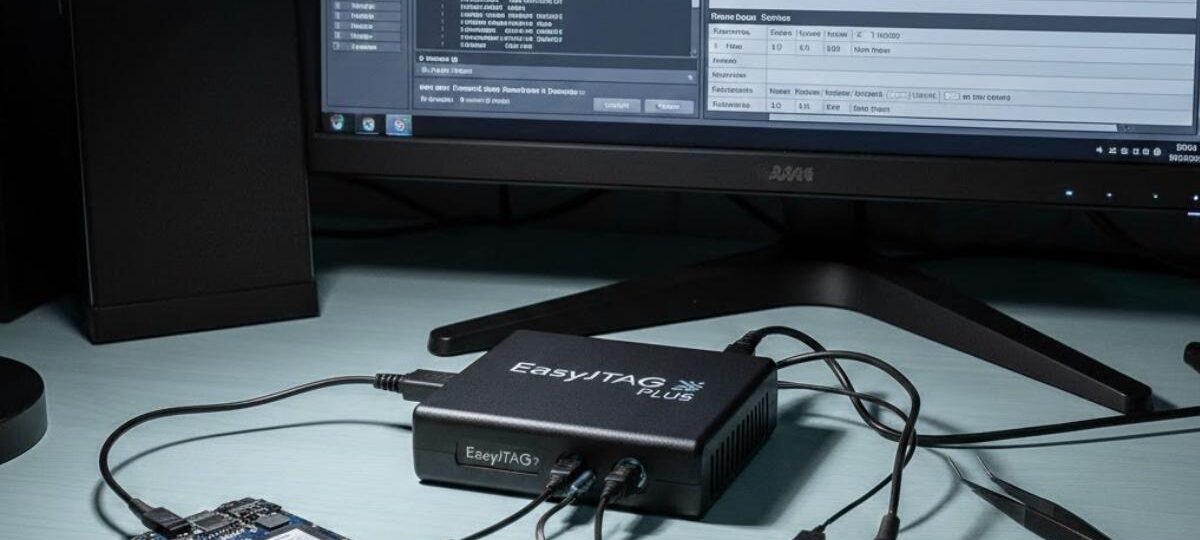
Mobile repair has changed dramatically over the past decade, and one of the tools that has consistently defined the professional standard is the EasyJTAG hardware and software ecosystem. Originally developed for eMMC chip work, the platform has grown into a full eMMC/UFS diagnostic and data-recovery suite used by service centers around the world. With each major release, the toolset becomes more capable, more stable, and better aligned with the rapidly evolving hardware inside today’s smartphones including Samsung, Huawei, Xiaomi, etc.
The latest EasyJTAG update continues this trajectory, and for many technicians, it represents one of the most meaningful leaps in functionality in recent years. Several long-requested features have been added, and areas that previously required advanced expertise or special procedures have been simplified. What follows is a practical breakdown of the update, why it matters, and how technicians can take advantage of the new capabilities.
Brief Look at EasyJTAG box
Before diving into the update, it’s worth understanding how EasyJTAG fits into the everyday workflow of a phone repair shop.
At its core, EasyJTAG is a chip-level interface for mobile phone memory, designed to unlock, read, write, diagnose and repair eMMC and UFS chips. This includes:
- data extraction from damaged devices
- dead-boot repair
- ROM backups and restores
- security area reconstruction
- partition management
- ISP (In-System Programming) and direct-socket work
While there are several other tools on the market, Z3X EasyJTAG has become dominant for a simple reason: it combines professional-grade hardware with a constantly evolving software stack. This balance made it a “must-have” tool for board-level specialists, refurbishers, and even forensic labs.
New Vendor-Level Flashing Support for MTK, Unisoc, and Tegra Devices
One of the most notable additions in the update is expanded vendor flashing support. Historically, vendor-level flashing required specialized tools or closed software provided only to manufacturers. EasyJTAG v3 and EMMC Plus tool now supports:
- MediaTek (MTK) vendor flashing
- Spreadtrum / Unisoc vendor operations
- Nvidia Tegra-based devices
For technicians, these additions mean:
- fewer tools required on the bench
- more consistent workflows across chipsets
- deeper access to locked or semi-bricked devices
Enhanced UFS Maintenance: Unlock Configurations, Smart Reports, and DataProtect Removal
UFS memory work has traditionally been more complex than eMMC arcitechture, and the update addresses this with several refinements.
UFS Unlock Configuration
Technicians can now access unlock commands for specific UFS chips, simplifying tasks like configuration repair, ROM reconstruction, and system initialization. It reduces the need for manual hex-level work and decreases risk during recovery operations.
UFS Smart Reports
The introduction of a smart-report function alows the technician to view diagnostic data at a glance—health status, configuration parameters, and key operational statistics. This is particularly valuable when evaluating chips from water-damaged or physically stressed devices.
DataProtect Removal
Removing UFS DataProtect flags on supported devices is now streamlined. In cases where firmware or configuration causes read/write restrictions, the new workflow can clear the protection safely, assuming hardware conditions permit it.
Expanded File System Explorer and Partition Tools
Z3x Easy JTAG’s built in file explorer now supports EXT, FAT, NTFS, EROFS, and F2FS. This means technicians can interact with partitions more like a traditional forensic platform. No switching tools. No external mounting steps.
Combined with the manual partition table scan feature, diagnosing non-standard layouts or partially corrupted chips becomes much more efficient. Users can map partitions even when automatic detection fails—an invaluable capability for damaged or heavily modified devices.
Updated Firmware Parsers and Unpackers
The update also includes improvements to several firmware unpacking utilities:
- OFP (Oppo/Realme)
- PAC (Unisoc/Spreadtrum)
- NB0
- LG firmware packages
The Preloader parser has been enhanced as well, addressing stability issues across various MTK builds. These improvements reduce extraction errors and make firmware analysis more consistent across different vendors.
eSIM Activation Support for LX9 Boxes
A quietly significant addition is the introduction of eSIM-related firmware and activation support for LX9 hardware. As more manufacturers transition away from physical SIM trays, having eSIM diagnostic and provisioning capabilities built into a chip-level tool ensures EasyJTAG remains relevant and portable.
What This Update Means for the Technician
Many technicians I’ve spoken with noted the enhanced value of this update not simply due to “more features”. It represents:
- More independence (fewer tools needed for the same work)
- Faster diagnostics via smart reports and expanded file system access
- Better long-term reliability thanks to updated firmware logic
EasyJTAG software package continues to mature from a memory-focused programmer into a broad hardware-level forensic ecosystem and, as reported by Cellcorner.com, is being increasingly used by government entities for forensic analisys and data extraction.
See Also: Securing Your Tech Stack: How To Choose Cybersecurity Software For Your Business