
Understanding the nuances of different tactics is crucial in the ever-evolving landscape of cyber threats. As you navigate this digital age, one such pernicious strategy you will encounter is “baiting.” This deceptive technique lures you into a trap by exploiting your curiosity or greed, often with the promise of something enticing—be it free software, exclusive content, or even a simple USB drive left in plain sight. As a professional or enthusiast in the field of cybersecurity, recognizing and mitigating the risks of baiting is essential to safeguarding information and maintaining robust digital defenses.
What Is Baiting in Cyber Security?
The Mechanics of Baiting
Baiting in cyber security is a sophisticated type of social engineering attack, exploiting human curiosity and the desire for gain. Cybercriminals employ enticing offers or rewards to lure victims into compromising their information security. This manipulation often involves promises of free software, discounts, or insider information. Attackers may distribute malware-infected USB drives, leave them in public places, or deploy fake websites that deliver malicious downloads upon a single click.
How Baiting Attacks Unfold
Typically, the baiting process occurs in three critical stages. First, the attacker captures the target’s attention with an appealing lure. This could be as apparent as a free gift offer or an unsolicited email embedded with a tempting link. Second, enticed by the bait, the victim takes an action, such as clicking on a link or downloading an attachment. Finally, after the victim’s compliance, the attacker exploits the target, accessing sensitive data or installing malware on their devices. Baiting thrives on more than just impulsive clicks; it leverages intricate tactics like spear baiting, targeting specific users or organizations with information curated from prior reconnaissance.
Prevention and Detection Strategies
To mitigate risks associated with baiting, organizations should foster a cyber-aware culture. Employee training plays a pivotal role in recognizing these tactics; skepticism concerning unsolicited offers and unfamiliar devices is essential. Additionally, maintaining up-to-date antivirus and antimalware software shields systems from potential threats. Simulated phishing attacks and regular security awareness initiatives help employees identify and resist baiting attempts. Building a robust and vigilant approach to cyber threats ensures resilience against the ongoing ingenuity of cyber attackers.
How Baiting Works in Technology
Breaking Down the Baiting Process
Baiting, a potent form of cyberattack, methodically exploits human psychology at multiple stages. Initially, the attacker captures attention with tempting offers, such as free gadgets or rewarding discounts. These offers are ingeniously designed to appear legitimate and appealing, effectively triggering curiosity or urgency in potential victims. The allure often comes through digital advertisements, emails, or even deceptively abandoned physical items like USB drives.
Techniques Employed in Baiting
Malvertising is a popular baiting tactic involving seemingly benign ads laden with hidden malware. Once clicked, these advertisements can initiate harmful software downloads onto the unsuspecting target’s device. Physical baiting—utilizing infected USB devices left in accessible areas—plays on innate human curiosity, leading viewers to plug these devices into their own systems, often with disastrous results.
The Consequences of Falling for Baiting
Should someone fall victim to baiting, they might inadvertently grant attackers access to sensitive data, leading to potential data theft or financial loss. Successfully downloaded malware can further compromise personal or organizational security, resulting in long-term damages that extend beyond mere information loss, potentially facilitating industrial espionage. Understanding these risks is crucial in recognizing and preventing such cyber threats.
What Is the Difference Between Baiting and Phishing?
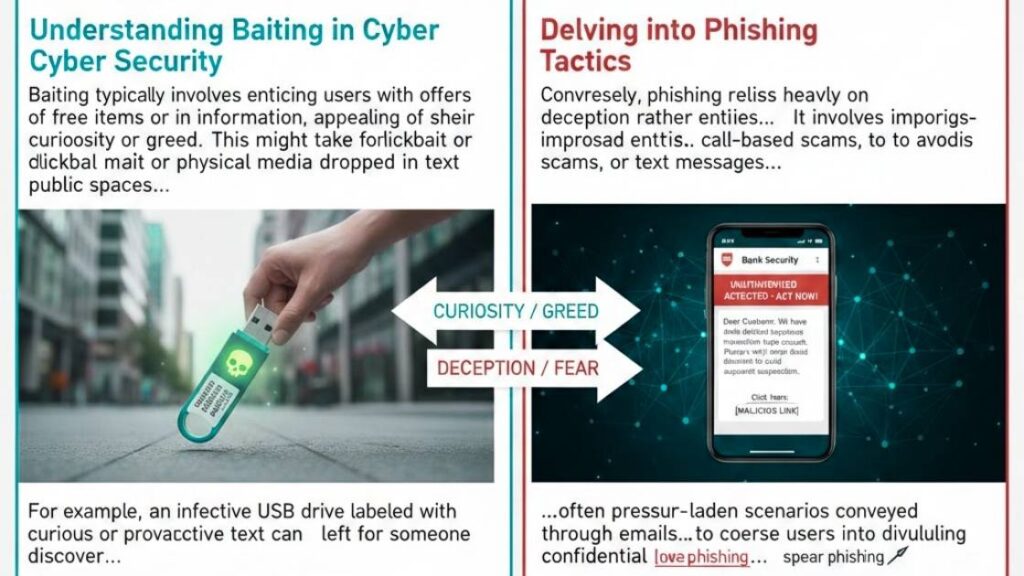
Understanding Baiting in Cyber Security
Baiting and phishing are often lumped together in discussions of cyber security threats, yet they employ distinct strategies. Baiting typically involves enticing users with offers of free items or information, appealing to their curiosity or greed. This might take the form of digital clickbait or physical media dropped in public spaces to lure a potential victim into downloading malware or leaking sensitive data. For example, an infective USB drive labeled with curious or provocative text can be left for someone to discover and insert into their computer.
Delving into Phishing Tactics
Conversely, phishing relies heavily on deception rather than curiosity. It involves impersonating trusted entities, often pressure-laden scenarios conveyed through emails, call-based scams, or text messages to coerce users into divulging confidential information like passwords or credit card numbers. Unlike baiting, phishing does not typically offer anything desirable but rather capitalizes on fostering fear or urgency to prompt a quick response. A common phishing variant is spear phishing, which targets specific individuals within organizations through carefully crafted personal messages.
Recognizing the Distinctions
While both baiting in cyber security and phishing fall under social engineering attacks, the core difference lies in the tactics employed: baiting capitalizes on human curiosity and lure, while phishing manipulates trust and fear. Understanding these nuances can enhance your ability to spot and combat these threats effectively, safeguarding your digital environment.
What Are Common Types of Baiting Attack Techniques?
Tempting Offers
One of the most prevalent baiting attack techniques involves the use of enticing offers to lure victims. Cybercriminals craft these offers—ranging from free software and music downloads to exclusive deals—to trick individuals into clicking malicious links or downloading harmful files. The intrinsic appeal of something for nothing often blinds victims to the potential threat, allowing attackers to deploy malware into systems without raising immediate suspicion. Understanding the guise of these too-good-to-be-true propositions can be pivotal in recognizing a baiting attempt before it causes harm.
Physical Infected Devices
Another common baiting attack is the strategic placement of malware-infected devices, such as USB drives, in public areas. The sheer intrigue of a forgotten device plays on human curiosity, enticing individuals to connect the device to their computers. This action can grant malware easy access to otherwise secure systems, leading to data breaches or system compromise. While seemingly innocuous, these tactics exploit basic psychological tendencies towards intrigue and helpfulness.
Customized and Targeted Attacks
Spear baiting represents a more meticulous approach, targeting specific users or organizations using personalized lures. Cybercriminals conduct in-depth reconnaissance, tailoring their baits to align with the target’s interests or needs, thereby increasing the likelihood of success. By mimicking brand communications or creating fake official messages, these attackers bypass standard security measures. This precision enhances the effectiveness of the baiting attempt, underlining the importance of vigilance and awareness in cybersecurity practices.
Examples of Baiting Social Engineering Attacks
USB Device Baiting
One common form of baiting in cyber security stems from the strategic placement of infected USB drives in public areas. These devices might be labeled enticingly as “Company Salary Data” or “Confidential Annual Report” to lure unsuspecting employees or individuals into inserting them into a device. Once connected, the malicious software on the drive silently installs itself, granting cybercriminals potentially unfettered access to sensitive information. This form of attack exploits curiosity and the human tendency to take advantage of seemingly fortuitous discoveries.
Online Offer Baiting
Another prevalent tactic involves online offers on websites or emails, which typically promise free music downloads, movie streams, or discount vouchers in exchange for registration. However, these enticing offers often lead unsuspecting users to malicious sites where they unknowingly disclose personal information or trigger the download of harmful software. Such tactics are particularly effective because they tap into the universal desire for freebies and exclusive deals, making them a potent weapon in the cybercriminal’s arsenal.
Understanding how baiting in cyber security operates is crucial for individuals and organizations alike. By recognizing these tactics, users can take proactive steps to protect themselves and their systems from potential exploitation.
Tips to Safeguard Your Company Against Baiting Attacks
Foster a Security-First Culture
Building a robust culture of cybersecurity is essential. Ensure all employees understand what baiting in cyber security entails and its potential repercussions. Regular training sessions should be conducted to help them identify and respond appropriately to baiting attempts. Encouraging employees to report suspicious activities without fear of repercussions fosters a proactive environment. This sense of shared responsibility can significantly enhance your organization’s resilience against baiting and other social engineering attacks.
Strengthen Technical Defenses
Implement robust security protocols and technology to filter out baiting threats. Use up-to-date antivirus software and advanced web and email filtering solutions to block potentially harmful content. Incorporate endpoint protection tools and consider managed IT services to bolster your defenses. Enforcing policies that restrict the use of unverified external devices helps prevent malware-infected USB drives from compromising your systems. Additionally, ensure software downloads are only made from verified sources to prevent digital baiting attempts.
Develop an Incident Response Plan
Establishing a clear, actionable incident response plan is crucial for mitigating the impact of baiting attacks. Regularly test and update this plan to ensure preparedness in case an attack occurs. This plan should include steps for immediate containment, eradication, and recovery from the attack. Clear communication channels between team members during an incident can prevent the spread of harmful consequences. By combining these strategies, your organization can effectively safeguard itself against the threat of baiting in cyber security.
Conclusion
In understanding baiting as a cybersecurity threat, you are now better equipped to recognize its deceptive tactics and protect your digital assets. As cybercriminals evolve, remaining vigilant and informed becomes paramount. By fostering a culture of awareness and employing robust security measures, you can mitigate risks and safeguard sensitive information. Embrace the proactive steps discussed, such as educating your team and implementing advanced cybersecurity tools, to fortify your defenses. In this ever-changing digital landscape, your commitment to cybersecurity will not only protect your organization but also contribute to the broader effort of creating a safer online environment for all.
See Also: Combating Threats in the Digital Age with Effective Cybersecurity Training