🔄 Last Updated: January 3, 2026
Artificial intelligence stands as a beacon of innovation and opportunity. As you step into 2026, embarking on a journey to master AI may appear daunting yet exhilarating. This guide is crafted to illuminate your path, offering insights and strategies tailored for beginners eager to delve into the world of AI. Whether your interest lies in transforming industries, advancing scientific research, or simply exploring a new frontier, you will discover practical steps to start learning AI. Embrace the challenge, equip yourself with knowledge, and unlock the potential to shape the future.
- Understanding Artificial Intelligence (AI): The Basics
- Why Should You Learn Artificial Intelligence in 2026?
- How to Start Learning AI as a Beginner
- Can You Learn AI With No Experience?
- The 30% Rule for AI: What You Need to Know
- Can You Self-Teach AI? Exploring Self-Guided Learning
- Tips for Excelling in AI: Master AI with Rovo
Understanding Artificial Intelligence (AI): The Basics
Definition and Function
Artificial Intelligence (AI) refers to the ability of machines to perform tasks that typically require human intelligence. These tasks include recognizing patterns, understanding language, and making decisions. At its core, AI aims to emulate human cognitive functions through computational processes. AI systems learn and improve over time, similar to human learning, by utilizing algorithms to learn from data and examples. This ability to continuously evolve makes AI systems increasingly proficient at their tasks without needing constant human instruction.
Types and Applications
AI can be classified into several types, such as narrow AI, designed for specific tasks, and strong AI, or artificial general intelligence, which is hypothetical at this stage. Current AI applications include chatbots, voice assistants, and even complex systems like self-driving cars. These systems rely on technologies such as neural networks and deep learning to function effectively. For instance, deep learning uses advanced neural networks to process and interpret massive data sets, enhancing the technology’s ability to generate accurate predictions and solutions.
Broader Implications
The potential for AI to transform industries is substantial, but it also comes with ethical and societal concerns. Issues such as bias and transparency need careful consideration to avoid inadvertent harm. As AI systems execute tasks that directly impact human lives, understanding their capabilities and limitations becomes essential in shaping ethical deployment. Engaging with AI responsibly ensures that these tools enhance human welfare rather than detract from it.
Why Should You Learn Artificial Intelligence in 2026?
The Transformational Power of AI
By 2026, artificial intelligence is set to revolutionize numerous industries, acting as a catalyst for significant advancements in both professional and personal realms. The integration of AI technologies will see them evolving from mere tools into indispensable partners in innovation. AI will reshape how we work, create, and solve complex problems, establishing itself as an essential player in industries ranging from finance to healthcare to creative arts. Notably, AI’s role in enhancing diagnostic accuracy and treatment planning will revolutionize healthcare accessibility and effectiveness.
Career Opportunities and Economic Impact
For those entering the workforce, learning AI in 2026 offers lucrative opportunities. As AI continues to become central to business operations, understanding its applications will provide a competitive edge. The demand for skills in AI encompasses various sectors, including business analytics, cybersecurity, and creative industries. With AI driving efficiency and innovation, future professionals equipped with AI knowledge can lead the charge in transforming business landscapes enhancing decision-making and customer experiences.
Global Relevance and Governance
The global landscape underscores AI’s importance. Successful navigation and application of AI will require comprehending evolving policies and ethical guidelines aimed at ensuring safety and transparency. Learning AI in 2026 will not only empower individuals with the technical skills necessary to harness AI’s potential but also with the knowledge to navigate its ethical complexities. Engaging with AI education today is a proactive step towards influencing its trajectory and mitigating any potential risks, enabling a responsible and innovative integration of AI into society.
How to Start Learning AI as a Beginner
Grasping the Foundations
Before diving deep into AI learning journeys, beginners should focus on building a solid foundation. Start by mastering essential skills like mathematics and programming, particularly Python, as these are crucial for understanding AI concepts. Learn data manipulation techniques using libraries, including pandas and NumPy, to prepare data for AI models. These stepping stones ensure you are well-rounded for the multifaceted challenges AI presents.
Hands-On Experience
Embrace a practical, project-driven approach to learning AI. Rather than merely absorbing theoretical knowledge, engage in building real-world AI projects. Choose activities that allow you to apply concepts in structured machine learning, deploying AI models, or integrating generative AI into applications. Engagement in hands-on projects not only reinforces your learning but also enhances your problem-solving and system-building skills.
Continuous Learning
Artificial Intelligence is continuously evolving, making continuous learning vital. Stay updated with the latest AI research, tools, and frameworks by joining online AI communities and participating in discussions. This engagement can expose you to a wealth of resources and networks that support your journey. Furthermore, considering the accelerated development within AI, don’t hesitate to explore open-source contributions and coursework to maintain and expand your expertise.
Can You Learn AI With No Experience?
Overcoming the Initial Hurdles
As a beginner pondering “How can a beginner start learning AI?” you might wonder if having no experience in the field could hinder your progress. The good news is, you can absolutely embark on this journey without a prior background. Embracing a structured learning path will be pivotal in overcoming initial obstacles. Begin by mastering foundational elements such as mathematics—focusing on linear algebra and calculus—and programming skills with a strong emphasis on Python, as these form the backbone of AI concepts.
Structured Learning Pathways
Starting with online courses from platforms like Coursera and MIT OpenCourseWare can provide a structured introduction to AI and machine learning. As you move forward, incorporate practical projects to reinforce theoretical concepts, such as building simple models and experimenting with real-world datasets. This hands-on approach will develop not only your skills but also a deeper understanding of AI system constraints and applications, as emphasized in learning roadmaps.
Joining Communities
Another valuable strategy includes joining AI communities and forums, such as Reddit’s r/learnprogramming, where you can engage with like-minded learners and experienced professionals. Discussing challenges and sharing insights can significantly enhance your learning curve. Engaging with these communities offers support and guidance, ensuring that your journey to mastering AI is both empowering and achievable, even for a complete novice.
The 30% Rule for AI: What You Need to Know
Embracing the 30% Rule
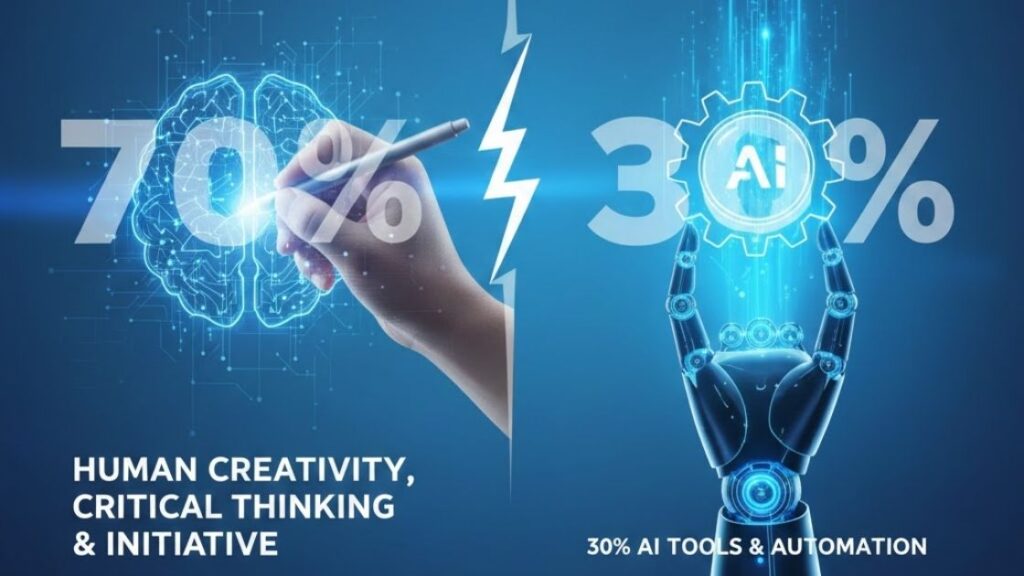
In the evolving landscape of artificial intelligence, the “30% AI rule” serves as a crucial guideline for beginners. This rule posits that no more than 30% of your work should rely on AI tools. The remaining 70% should stem from your own creativity, critical thinking, and initiative. By adopting this approach, you can leverage AI as a supportive partner in the learning process rather than a replacement for your own intellectual engagement. This principle ensures a balanced integration of AI, sparking creativity and fostering an environment where you can enhance your skills rather than diminish them.
Maximizing Human-Machine Collaboration
Understanding how to start learning AI effectively involves recognizing its potential to complement rather than overshadow human capabilities. While AI excels in automating repetitive tasks, its true value shines in the remaining 30% of tasks that require human creativity and strategic thinking. This human-machine synergy is pivotal in areas like education, creative services, and even legal domains, where AI supports rather than supplants expertise. As you embark on learning AI, focus on tasks where AI can act as a catalyst for innovation, supplementing your unique intellectual insights.
Can You Self-Teach AI? Exploring Self-Guided Learning
The Path to Self-Teaching AI
Embarking on a self-taught journey in Artificial Intelligence (AI) is both viable and rewarding. With the plethora of resources available online, you can build a solid foundation without enrolling in formal education. Start with comprehensive beginner-friendly curriculums like Microsoft’s AI for Beginners, which offers a structured program covering symbolic AI, neural networks, and more. This 12-week curriculum incorporates tools such as TensorFlow and PyTorch, making complex concepts more accessible.
Building Practical Skills Independently
While theory is crucial, practical skills drive competence in AI. Engage with hands-on projects and tools that enhance your learning curve. Platforms such as Cubeo AI and Teachable Machine let you experiment with AI without requiring extensive coding knowledge. These resources encourage the application of concepts through projects like crafting AI assistants.
Staying Informed and Connected
Keeping abreast of AI trends is essential. Tapping into online communities through forums and Discord servers helps you connect with peers who can share insights and support. Being part of a community enriches your learning experience, offering motivation and additional resources. Regularly exploring educational content, from blog posts to YouTube tutorials, will ensure you remain informed and inspired.
Tips for Excelling in AI: Master AI with Rovo
Leverage Practical Tools
To truly excel in the world of artificial intelligence, it’s essential to incorporate practical tools into your learning journey. One invaluable resource is Rovo, an AI-powered tool that seamlessly integrates with various platforms to enhance project management and collaborative efforts. By exploring Rovo’s capabilities—as seen in tools like Atlassian’s Confluence and Jira—you can automate mundane tasks, receive intelligent insights, and streamline decision-making processes. Utilizing such tools not only enriches your learning experience but also provides tangible benefits to your workflows.
Set Clear Goals and Expectations
Embarking on the AI learning path can be daunting, but setting clear goals can make the journey manageable and rewarding. Establish what you aim to achieve, whether it’s mastering a particular AI technique or understanding its practical applications in your field. Engage with resources like online courses and AI communities to build a strong foundation and stay motivated. Consistency and structured learning plans are vital for tracking progress and overcoming challenges.
Engage with AI Communities
Connecting with AI communities can significantly boost your understanding and skills. These communities foster collaboration, support, and knowledge sharing among like-minded enthusiasts and professionals. By actively participating in discussions and projects within these groups, you can gain valuable insights and expand your network. This collaborative spirit is essential in mastering AI effectively and efficiently.
Remember, addressing the question, “How Can a Beginner Start Learning AI” involves not only leveraging the right tools like Rovo but also engaging with the broader AI community and setting focused learning objectives.
FAQs

What Skills Should I Focus On First?
As you embark on learning AI, laying a solid foundation in essential skills is crucial. Begin your journey with proficiency in mathematics and statistics, as these are the bedrock of AI algorithms. Python programming is crucial due to its versatility and the vast array of AI libraries. Addressing these fundamentals will empower you to thrive in more advanced topics like machine learning and deep learning.
What Learning Resources Should I Use?
There are numerous resources to facilitate your AI education. Consider starting with Harvard’s CS50 courses, which introduce key AI concepts and the Python language. Books such as “Hands-On Machine Learning with Scikit-Learn, Keras & TensorFlow” offer a practical introduction for beginners, enabling hands-on practice and deeper understanding.
How Can I Build Real-world AI Projects?
To solidify your learning, focus on practical applications. Work on end-to-end projects, such as building a “Smart Career Assistant” that highlights your skills. Practice deploying models by creating APIs and dashboards, employing tools like MLflow and FastAPI to turn theory into production-ready systems, vital for career readiness in 2026’s competitive AI job market.
Conclusion
In embarking on your AI journey in 2026, you are stepping into a world where the potential for innovation and growth is boundless. By leveraging structured courses, engaging with vibrant online communities, and staying abreast of the latest trends, you lay a solid foundation for your AI endeavors. Remember, persistence and curiosity are your greatest allies in this ever-evolving field. As you explore the complexities of artificial intelligence, you not only enhance your skills but also position yourself at the forefront of technological advancement. Embrace the challenges and opportunities that come your way, and watch your AI expertise flourish.
See Also: AI Content Creation: Transforming Industries with ChatGPT and More