Technology in the classroom is no longer optional. It is a core pillar of modern education. Schools worldwide are rapidly adopting digital tools, AI platforms, and interactive learning environments. Teachers and administrators now agree: smart EdTech integration directly improves student outcomes.
In fact, AI-powered systems are reshaping not just security, but also how students learn every day. Moreover, the global EdTech market is projected to reach $404 billion by 2025, signaling a massive shift in how we define learning.
This guide breaks down the best, most practical ways to use technology in the classroom in 2026. Whether you are a K-12 teacher, school administrator, or education policymaker, this article gives you actionable strategies, real data, and reliable tools.
Why Technology in the Classroom Matters More Than Ever
Before diving into strategies, the data speaks clearly. Consider these verified findings:
| Statistic | Source |
|---|---|
| 92% of teachers say technology has a major impact on student learning | WifiTalents, 2026 |
| 85% of U.S. teachers used digital tools daily in 2023 | Gitnux, 2026 |
| Students using tech scored 15% higher on average in math | Gitnux, 2026 |
| AI-personalized learning improved reading proficiency by 20% | Gitnux, 2026 |
| 65% of workforce experts say tech-trained students are better prepared | WifiTalents, 2026 |
| 72% of teachers used AI tools for lesson planning in 2023 | WifiTalents, 2026 |
| EdTech interventions boosted STEM retention by 25% in U.S. | Gitnux, 2026 |
These numbers are compelling. Furthermore, 73% of students say they cannot study as effectively without technology. Consequently, building a tech-integrated classroom is not just a trend — it is an educational imperative.
1. Use AI-Powered Tools for Personalized Learning
Personalized learning is one of the most powerful applications of technology in the classroom. AI tools adapt content, pace, and difficulty to each student’s needs. Therefore, students receive a truly customized experience.
Platforms like Khan Academy, Google Classroom, and Duolingo now use AI-driven features. These tools adjust lesson difficulty in real time. As a result, students who fall behind get extra support automatically. Meanwhile, advanced learners progress without waiting.
Additionally, understanding AI vs machine learning helps teachers choose the right tools for their classrooms. Teachers who grasp these distinctions make smarter EdTech decisions.
Actionable tip: Start with one AI tool per subject. Measure student progress after 30 days. Then expand based on results.
2. Integrate Learning Management Systems (LMS)
Learning Management Systems are a cornerstone of modern classroom technology. Tools like Google Classroom, Canvas, Moodle, and Blackboard give teachers full control over course content, assignments, and assessments.
Notably, 67% of global educators had integrated an LMS by 2022. These platforms centralize learning. Students access materials anytime. Teachers track progress efficiently. Consequently, classroom management becomes smoother and more data-driven.
Moreover, Google Workspace for education offers affordable LMS features for schools of all sizes. Understanding your budget before committing to a platform is essential.
Key LMS benefits:
- Centralized assignment delivery and submission
- Real-time progress tracking for every student
- Easy parent-teacher communication integration
- Seamless integration with Google Drive and Microsoft Teams
3. Gamify Lessons to Boost Engagement
Gamification is one of the most effective applications of classroom technology. It transforms passive learning into active participation. Students earn points, complete challenges, and compete in friendly academic battles.
In fact, gamification tools saw a 40% usage increase in STEM education by 2022. Tools like Kahoot!, Blooket, and Quizlet Live make quizzes feel like video games. Students pay more attention. They remember content longer.
For instance, educational gaming tools like Blooket have transformed how teachers run reviews and assessments. Similarly, real-time class-wide competitions energize even the most disengaged students.
Additionally, gamified platforms provide teachers with instant performance data. You can see which students struggled with which questions. Therefore, you adjust your next lesson based on real evidence — not guesswork.
4. Bring Virtual Reality Into the Learning Experience
Virtual Reality (VR) in the classroom is no longer science fiction. It is an increasingly accessible tool that creates immersive learning environments. VR headsets let students visit ancient Rome, walk inside a human cell, or explore the ocean floor.
VR and AR usage in classrooms grew 35% year-over-year, reaching 25% adoption in 2023. Furthermore, 84% of educators believe VR has strong potential to enhance education.
Emerging technologies like VR and AR are reshaping education at every level. Schools that adopt these tools now build a clear competitive advantage.
Blackboard’s Virtual Reality Suite, for example, allows virtual field trips and interactive simulations. These experiences deepen understanding in ways textbooks simply cannot match.
5. Leverage No-Code Tools for Student Projects
Technology in the classroom should empower students to create, not just consume. No-code platforms let students build apps, websites, and tools without writing a single line of code. This develops critical thinking, problem-solving, and digital literacy simultaneously.
No-code app builders for education are increasingly accessible for school projects. Students can design functional prototypes as part of STEM, business, or design classes. As a result, learning becomes hands-on and directly tied to real-world skills.
Moreover, 65% of workforce experts confirm that students who use technology in school are better prepared for the job market. Teaching students to build with technology closes that preparation gap significantly.
6. Use AI Automation for Teacher Efficiency
Teachers spend enormous time on administrative tasks. AI automation changes that. From grading to lesson planning, automation tools free teachers to focus on what matters most — actually teaching.
Weekly AI users among teachers save nearly six weeks of work per year, according to Gallup’s 2025 research. Furthermore, 72% of teachers already used AI tools for lesson planning in 2023. This adoption is accelerating rapidly.
For instance, no-code automation tools like Make.com can handle repetitive administrative tasks in minutes. Consequently, teacher burnout decreases and instructional quality rises.
Additionally, open-source AI agent frameworks are now being adapted for educational environments. These tools help teachers generate differentiated lesson plans at scale.
7. Prioritize Digital Literacy as a Core Skill
Technology in the classroom is not just about using tools. It is also about teaching students how to think critically in a digital world. Digital literacy is now a top priority for 82% of school administrators globally.
Students must learn to evaluate online sources, identify misinformation, and protect their digital privacy. These are essential life skills in 2026 and beyond.
Cybersecurity education should start early. Understanding basic online safety, phishing recognition, and password hygiene prepares students for a connected future.
Moreover, low-cost AI tools for everyday workflows are now accessible even to school-level learners. Teaching students to use these tools responsibly builds lifelong competencies.
8. Implement Blended Learning Models
Blended learning combines in-person instruction with online digital tools. It gives students flexibility while maintaining the irreplaceable value of face-to-face interaction. Post-pandemic research confirms blended models outperform purely traditional or purely online approaches.
In fact, 75% of courses in higher education used video conferencing post-2020. Meanwhile, 81% of universities offered MOOCs with 220 million enrollments in 2023. Blended learning is not a temporary fix. It is the new standard.
Software and apps built for education give teachers powerful flexibility in blended environments. Platforms like Zoom, Google Meet, and Microsoft Teams integrate directly with LMS tools for a seamless experience.
9. Use Digital Storytelling and Content Creation Tools
Technology empowers students to communicate ideas in compelling ways. Digital storytelling, video production, and content creation tools develop communication skills, creativity, and confidence. Students who produce digital content become stronger communicators.
Tools like Canva, Adobe Express, and iMovie are accessible at the K-12 level. Additionally, teachers can use content marketing tools for education to build more engaging lesson presentations and materials.
For instance, a history teacher could assign students to create short documentary videos. A science teacher could ask students to design infographics. The result is deeper learning and stronger long-term retention.
10. Protect Classroom Tech with Cybersecurity Awareness
More technology in classrooms means a bigger digital attack surface. Schools are increasingly targeted by cyberattacks. Therefore, incorporating basic cybersecurity awareness into classroom technology use is non-negotiable.
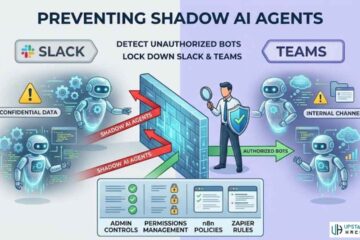
Shadow AI agents in school platforms are an emerging and underappreciated threat. Students and teachers unknowingly install unauthorized AI tools that expose sensitive data.
Furthermore, disaster recovery services for schools ensure that data breaches or system failures do not disrupt the learning environment permanently. Schools that plan ahead recover faster and stronger.
Pros and Cons of Technology in the Classroom
Pros:
- Personalizes learning for every student’s pace and style
- Increases student engagement and participation significantly
- Saves teacher time through automation and AI tools
- Builds critical digital literacy and workforce-ready skills
- Expands access to global resources, courses, and experts
Cons:
- Risk of digital distraction and off-task behavior
- Widens the equity gap between well-funded and under-resourced schools
- Over-reliance on AI can reduce independent thinking skills
- Privacy and cybersecurity risks increase with more connected devices
- Requires consistent teacher training and professional development
Top EdTech Tools for Classrooms in 2026
| Tool | Category | Best For |
|---|---|---|
| Google Classroom | LMS | Assignment management, K-12 and higher ed |
| Khan Academy | AI Learning | Personalized math and science practice |
| Kahoot! | Gamification | Review sessions and formative assessments |
| Blooket | Gamification | Engagement-driven content review |
| Canva for Education | Content Creation | Visual projects and digital storytelling |
| Duolingo | Language Learning | Language acquisition and vocabulary |
| Zoom / Google Meet | Video Conferencing | Blended and remote learning |
| Make.com | Automation | Teacher workflow automation |
| SMART Board | Interactive Whiteboard | Collaborative whole-class activities |
| Quizlet | Study Tools | Vocabulary and concept memorization |
External Authority Resources
Education Week — Leading source for K-12 education news, policy, and technology research.
- ISTE — International Society for Technology in Education — Global standards and professional development for EdTech educators.
FAQs

What is the best way to use technology in the classroom?
The best approach combines multiple strategies. Use AI for personalized learning, LMS platforms for organization, and gamification tools for engagement. Start with one tool at a time. Measure results. Then scale what works.
How does technology improve student learning outcomes?
Technology improves outcomes by personalizing instruction, providing instant feedback, and increasing engagement. Research shows students using EdTech score up to 15% higher in math and show 20% improvement in reading proficiency through AI-based personalized learning.
What are the risks of technology in the classroom?
The main risks include digital distraction, over-reliance on AI reducing independent thinking, cybersecurity vulnerabilities, and widening the digital divide between students with and without home internet access.
Which EdTech tools are best for K-12 classrooms?
Top tools include Google Classroom for LMS, Kahoot! and Blooket for gamification, Khan Academy for AI-personalized learning, and Canva for Education for creative digital projects. The best tool always depends on your subject and student age group.
How can teachers stay safe while using classroom technology?
Teachers should avoid installing unauthorized apps, use strong passwords for all platforms, and follow district cybersecurity policies. Schools should also invest in disaster recovery planning and train all staff on basic digital security practices.
Final Thoughts: Make Technology Work for Your Classroom
Technology in the classroom is a powerful lever. However, it works best when it serves clear learning goals — not the other way around. The most effective educators treat technology as quiet infrastructure, not the centerpiece of education.
Start small. Test tools. Gather feedback from students. Scale what drives results. Furthermore, always prioritize digital literacy and cybersecurity alongside academic technology use.
For more expert insights on AI, automation, and emerging technology, explore the full resource library at Upstanding Hackers AI & Automation. Additionally, dive deeper into how AI is augmenting human potential across education, business, and beyond.
The classroom of 2026 is already here. The question is whether you are ready to lead it.
See Also: 7 Ways Technology Has Improved Our Lives