Your new customer just booked a call. Your analytics say they came from organic search. You ask how they actually found you. They say a colleague mentioned your name in a WhatsApp group three months ago.
That is dark funnel marketing — and it is quietly responsible for most of your best customers in 2026.
According to research cited by Prospeo, 84% of B2B buyers choose their preferred vendor before ever contacting sales. Most of that research happens in places your Google Analytics dashboard will never see. For small businesses, this gap between what drives sales and what gets measured is growing wider every year.
This guide explains what dark funnel marketing is, why small businesses are uniquely positioned to win in it, and exactly what to do this week to start showing up where your customers are quietly making decisions.
What Is Dark Funnel Marketing?
Dark funnel marketing is the strategy of building brand presence in the untrackable parts of the buyer journey — the private conversations, peer recommendations, and AI-assisted research sessions that shape purchase decisions before any measurable touchpoint occurs.
The term “dark funnel” refers to the portion of the customer journey your analytics cannot see. It includes:
- Private Slack and Discord communities where professionals ask peers for honest vendor reviews
- WhatsApp and LinkedIn DMs where someone shares your name before a buying decision
- Reddit threads in niche subreddits where buyers search for “[your category] alternatives”
- Podcast episodes where your business is mentioned but never clicked
- ChatGPT, Perplexity, and Gemini conversations where buyers compare vendors without visiting any website
The dark funnel refers to all the buyer activity and content sharing that happens in channels invisible to traditional analytics and attribution software — including private conversations in Slack and Teams, DMs on LinkedIn, closed community groups, word-of-mouth recommendations, and podcast mentions.
For small businesses, this is not a problem to solve. It is an opportunity to exploit. Here is why.
Why Small Businesses Actually Win in the Dark Funnel
Enterprise brands dominate Google. They have domain authority, content teams, and paid search budgets that small businesses cannot match on a like-for-like basis.
However, the dark funnel levels that playing field completely.
In a private Facebook group for local business owners, a genuine recommendation from a trusted peer carries more weight than any paid ad. In a Reddit thread asking for accounting software recommendations, an honest helpful comment from a real user beats a $50,000 content marketing campaign. In a ChatGPT conversation asking for “best graphic designers in [city],” a well-structured website with clear entity signals can earn a citation that a Fortune 500 brand misses entirely.
The single highest-leverage move in 2026 is making sure your brand is being cited by AI assistants when a buyer asks for vendor recommendations in your category — the discipline now called AEO (Answer Engine Optimization) or GEO (Generative Engine Optimization), which is structurally different from traditional SEO.
Small businesses that understand this shift stop chasing clicks and start building presence. The tactics are different — and considerably cheaper.
For more on how AI citations work and how to earn them, our generative engine optimization guide covers the full technical and content strategy behind it.
The 5 Dark Funnel Channels That Matter for Small Businesses in 2026
1. Private Communities and Peer Forums
Reddit, Facebook Groups, Slack communities, and niche Discord servers are where your ideal customers ask real questions before buying. They do not ask brands. They ask peers. Therefore, the business that shows up authentically in these conversations — answering questions, sharing genuine insights, never pitching — builds trust that no ad can replicate.
The tactic: identify three communities where your ideal customers gather. Show up weekly with useful contributions. Do not link to your site unless directly asked. This is a 90-day game, not a 90-minute one.
2. Word of Mouth and Direct Referrals
Word of mouth remains the most powerful dark funnel channel for small businesses — and it is entirely invisible in your analytics. Moreover, it is not random. It is engineered.
The tactic: build a deliberate referral trigger into your post-purchase experience. Ask every satisfied customer one question: “Is there anyone else you know who would benefit from this?” The timing is immediately after they express satisfaction — not in a follow-up email three weeks later. Additionally, make it easy to share by giving them specific language: “You can tell them we helped you [specific result].”
3. AI Answer Layer — ChatGPT, Perplexity, Gemini
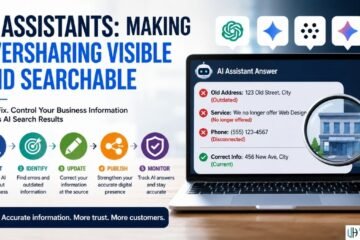
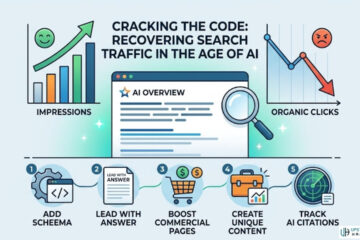
This is the fastest-growing dark funnel channel in 2026. Zero-click search is no longer confined to Google. In 2026, it stretches across ChatGPT, Perplexity, Gemini, Bing, and Meta AI — users ask questions, receive instant answers, and often never reach a website.
When a potential customer asks ChatGPT “what is the best [your service] in [your city]” or “who should I hire for [your niche],” does your business get mentioned? If not, that is a dark funnel gap costing you customers daily.
The tactic: Structure your website content with clear, entity-rich answers. Use FAQPage schema. Write content that directly answers the questions your customers ask AI tools. Our guide on best free AI tools for small business marketing covers the free tools that help you monitor and improve AI citations.
4. Podcast and Video Mentions
Someone mentions your business on a podcast. Forty people hear it. Three of them become customers — and all three show up in your analytics as “direct” traffic because they typed your URL directly into a browser.
This is dark funnel activity at its most invisible and its most valuable. Podcast listeners convert at significantly higher rates than cold ad audiences because the referral comes with built-in trust transfer from the host.
The tactic: identify five podcasts your ideal customers listen to. Pitch to be a guest. Alternatively, sponsor a single episode on a niche show with a highly specific audience. The ROI on niche podcast sponsorship in 2026 consistently outperforms equivalent spend on display advertising for small service businesses.
5. LinkedIn and Email Dark Social
When someone forwards your email to a colleague, your analytics record nothing. When someone screenshots your LinkedIn post and shares it in a private group, your analytics record nothing. However, both actions frequently generate inbound enquiries.
Privacy-first personalization and stricter regulations are pushing brands toward zero- and first-party data, transparent value exchanges, and consent-based personalization as core competitive advantages.
The tactic: add one forward-worthy element to every email you send — a specific insight, a useful framework, or a contrarian take that makes the reader think “I need to send this to someone.” Content that gets shared in the dark funnel does not go viral publicly. It moves privately, and it moves with intention.
How to Measure What You Cannot Track
The dark funnel is, by definition, unmeasurable in traditional analytics. However, two practical methods give you workable signal without perfect data.
Self-reported attribution: Add an open text field to every contact form, booking page, and post-purchase survey. The question: “How did you first hear about us?” Do not give dropdown options — open text forces honest, specific answers. Over 90 days, the pattern that emerges reveals your actual dark funnel channels, not the ones your GA4 dashboard credits.
Pipeline interview: Call your last 10 customers. Ask them to walk you through how they found you and what they considered before deciding. This 15-minute conversation regularly reveals two or three dark funnel channels you had no idea were driving demand. Consequently, you can invest more intentionally in exactly those channels.
For a practical framework on building the content that performs well in both the visible and invisible funnel, our content marketing strategy guide walks through the full approach.
Your Dark Funnel Action Plan for This Week
The goal is not to track the dark funnel. The goal is to show up consistently in the places where your buyers make decisions — whether anyone can measure it or not.
Start here:
- Ask your last 5 customers how they really found you — open conversation, not a survey
- Join one community where your ideal customers gather and contribute for 30 days without pitching
- Google your own business name plus “review,” “alternative,” and “recommendation” — read every result
- Ask ChatGPT and Perplexity what businesses they recommend in your category and location — see if you appear
- Add an open text attribution question to your next contact form or booking page
These five actions cost nothing. They will reveal more about where your customers actually come from than any analytics platform you currently pay for.
Furthermore, as AI-driven search continues to absorb more of the buyer journey in 2026, the businesses that dominate the dark funnel will dominate customer acquisition — regardless of their paid search budget. For small businesses, that is not a threat. That is the most level playing field the internet has offered in a decade.
For more on how AI is augmenting human marketing rather than replacing it, and how no-code AI automation can help you execute dark funnel strategies at scale, explore the resources linked throughout this guide.
FAQs
What is dark funnel marketing in simple terms?
Dark funnel marketing is any buyer activity that influences a purchase decision but never appears in your analytics. It includes word-of-mouth recommendations, private community discussions, podcast mentions, AI assistant responses, and direct messages. For small businesses, dark funnel channels frequently drive more high-quality customers than trackable paid channels.
How is the dark funnel different from dark social?
Dark social is a subset of the dark funnel. Dark social refers specifically to private content sharing — links shared via WhatsApp, DMs, or email that strip referral data and appear as “direct” traffic. The dark funnel is broader — it includes any untrackable buyer research, including AI conversations, private communities, and offline word of mouth.
Can small businesses measure dark funnel marketing?
Not precisely — and that is acceptable. The practical measurement method is self-reported attribution: an open text field on your contact form asking how the person found you. Over 90 days, this reveals the actual channels driving enquiries. Additionally, interviewing recent customers about their decision journey consistently reveals dark funnel channels analytics never capture.
How do I get my small business mentioned in AI answers?
Structure your website content with direct answers, use FAQPage schema, build topical authority through consistent publishing, and ensure your Google Business Profile is complete and accurate. AI systems like ChatGPT and Perplexity cite sources that are clear, specific, and structured — not vague or generic. Our GEO guide covers the full strategy.
Is dark funnel marketing worth investing in for a small business?
Yes — particularly because dark funnel channels are where trust is built before any trackable interaction occurs. Customers who arrive via dark funnel referral (peer recommendation, AI citation, community mention) convert at significantly higher rates than cold traffic because they arrive pre-sold. Investing in dark funnel presence is investing in the quality of your inbound pipeline, not just its volume.