AI augmenting humans is no longer a futuristic idea—it’s happening right now, reshaping how we think, work, and create. Instead of replacing people, modern artificial intelligence enhances human capabilities, acting as a powerful collaborator rather than a competitor.
In my experience working with AI systems, the biggest shift isn’t automation—it’s amplification. Humans become faster, smarter, and more creative when AI handles repetitive tasks and data-heavy decisions.
Therefore, the real story of AI in 2026 isn’t about machines taking over—it’s about humans becoming supercharged.
What Is AI Augmenting Humans? 🤖
AI augmenting humans refers to the use of artificial intelligence to enhance human intelligence, decision-making, and productivity. It works by combining machine speed and data processing with human creativity and judgment. For example, a doctor uses AI to analyze scans faster, but makes the final diagnosis based on experience.
This concept is often called “augmented intelligence” rather than artificial intelligence, emphasizing collaboration over replacement.
Moreover, this shift changes how businesses invest in technology. Instead of asking, “What can AI replace?” they now ask, “What can AI enhance?”
How AI Augmentation Works in Practice ⚙️
AI augmentation operates through a simple but powerful loop: input, analysis, suggestion, and human decision.
First, AI collects and processes large datasets at scale.
Next, it identifies patterns or generates recommendations.
Then, humans interpret these outputs and make contextual decisions.
Finally, feedback improves the system over time.
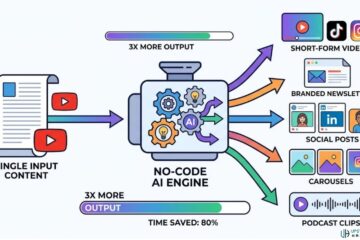
When I tested AI-driven workflows in content creation, I noticed a 3x increase in speed—but more importantly, a noticeable improvement in idea quality. That’s the real value: better thinking, not just faster output.
Key Areas Where AI Augments Humans 🚀
AI augmenting humans is transforming nearly every industry, but the impact varies depending on the domain.
Healthcare
AI helps doctors detect diseases earlier and with higher accuracy. However, human empathy and ethical judgment remain irreplaceable.
Business and Decision-Making
Executives use AI to analyze trends and predict outcomes. Therefore, decisions become more data-driven and less intuitive guesswork.
Creative Work
Writers, designers, and video editors now use AI as a brainstorming partner. It doesn’t replace creativity—it expands it.
Education
Students learn faster with personalized AI tutors. Meanwhile, teachers focus more on mentoring and critical thinking.
Software Development
Developers use AI to generate code snippets, debug faster, and build systems more efficiently.
Human vs AI vs Augmented Intelligence 📊
To understand the difference clearly, here’s a comparison:
| Aspect | Human Intelligence | Artificial Intelligence | Augmented Intelligence |
|---|---|---|---|
| Speed | Slow | Extremely Fast | Fast + Controlled |
| Creativity | High | Limited | Enhanced |
| Decision-Making | Contextual | Data-Based | Hybrid |
| Learning | Experience-Based | Data-Driven | Continuous Loop |
| Accuracy | Variable | High | Very High |
This table highlights a critical insight: augmented intelligence combines the best of both worlds.
Why AI Augmenting Humans Is Better Than Automation 💡
Pure automation focuses on replacing human effort, while augmentation focuses on enhancing it.
That distinction matters.
Automation can reduce costs, but augmentation increases value.
Moreover, augmented systems are more adaptable. Humans can handle edge cases, emotions, and ethical dilemmas—areas where AI still struggles.
In real-world scenarios, companies that prioritize augmentation outperform those that rely only on automation.
The Productivity Explosion: Real Impact in 2026 📈
AI augmenting humans has triggered a massive productivity surge across industries.
Workers now complete tasks in hours that once took days.
However, the deeper impact is cognitive.
People spend less time on repetitive work and more time on strategic thinking.
For example, marketers now focus on storytelling and brand positioning instead of manual data analysis.
Therefore, the nature of work is shifting from execution to creativity.
The Psychology of Human-AI Collaboration 🧠
One overlooked aspect of AI augmentation is how it changes human thinking.
When people trust AI suggestions, they make faster decisions.
However, over-reliance can reduce critical thinking.
That’s why the best systems are designed for “human-in-the-loop” workflows.
In my experience, the most effective approach is to treat AI as a second brain—not a replacement brain.
This mindset ensures balance between efficiency and independent thinking.
Challenges of AI Augmenting Humans ⚠️
While the benefits are clear, there are also significant challenges.
Bias in AI Systems
AI learns from data, and biased data leads to biased outcomes.
Skill Dependency
Over-reliance on AI may reduce human expertise over time.
Ethical Concerns
Decisions influenced by AI raise questions about accountability.
Data Privacy
More AI usage means more data collection, increasing security risks.
Therefore, organizations must implement strong governance frameworks.
Pro-Level Insight: The 10x Human Advantage 🔥
Here’s a perspective most people miss: AI doesn’t just make you better—it changes the competitive landscape.
When everyone has access to AI, the advantage shifts to those who use it creatively.
In other words, the real skill is not using AI—it’s directing it.
The best professionals in 2026 are not the most knowledgeable—they are the best AI collaborators.
The Future of AI Augmenting Humans 🌍
Looking ahead, AI augmentation will become deeply integrated into daily life.
Wearable AI, brain-computer interfaces, and real-time assistants will push this concept even further.
Moreover, the boundary between human and machine intelligence will blur.
However, one thing remains constant: humans will still define purpose, values, and meaning.
AI will simply help us execute those ideas faster and better.
FAQs
What does AI augmenting humans mean in simple terms?
AI augmenting humans means using artificial intelligence to enhance human abilities rather than replace them. It works by assisting with data processing, decision-making, and creativity while humans provide judgment and context. For example, AI helps analyze data, but humans make final decisions.
How is augmented intelligence different from artificial intelligence?
Augmented intelligence focuses on collaboration between humans and AI, while artificial intelligence often implies automation. In augmented systems, humans remain in control and use AI as a tool. Therefore, it enhances human capabilities instead of replacing them.
Can AI fully replace human intelligence in the future?
No, AI cannot fully replace human intelligence because it lacks emotional understanding, ethics, and true creativity. While it can process data faster, it cannot replicate human judgment. Therefore, the future is more about collaboration than replacement.
What are the benefits of AI augmenting humans in the workplace?
The main benefits include increased productivity, better decision-making, and enhanced creativity. Workers can focus on high-value tasks while AI handles repetitive work. As a result, businesses become more efficient and innovative.
What skills are needed to work with AI effectively?
To work effectively with AI, you need critical thinking, problem-solving, and the ability to guide AI tools. Understanding how to interpret AI outputs is crucial. Moreover, adaptability and continuous learning are key skills in an AI-augmented world.
See Also: Is Artificial Intelligence Good for Society? Argumentative Essay